Friday, August 24, 2018

The final hunt

Devon, our final ancestor hunt. We found plenty of S's people in these rolling green hills.

S standing at the door of the church at Iddlesleigh, surveying her ancestral lands in north Devon. Inside the church are two stained glass windows dedicated to her family and in the floor towards the altar, is a large stone slab with two iron rings to lift it which leads to the family vault.  They were the leading family in this area.
 This was their house for a few hundred years. It is still a private home.

The motto above the window on the front of the house. There can be no doubt that S is descended from these people.
A later generation  S's branch of the same family lived in this large farm house whose land includes the remains of a 13th century priory that was ruined by Henry VIII's forces when he banned the Catholic Church in the 15th century. 
 The current owner showed us inside.

Another farm owned by S's family in the 1800s, now converted into holiday apartments.
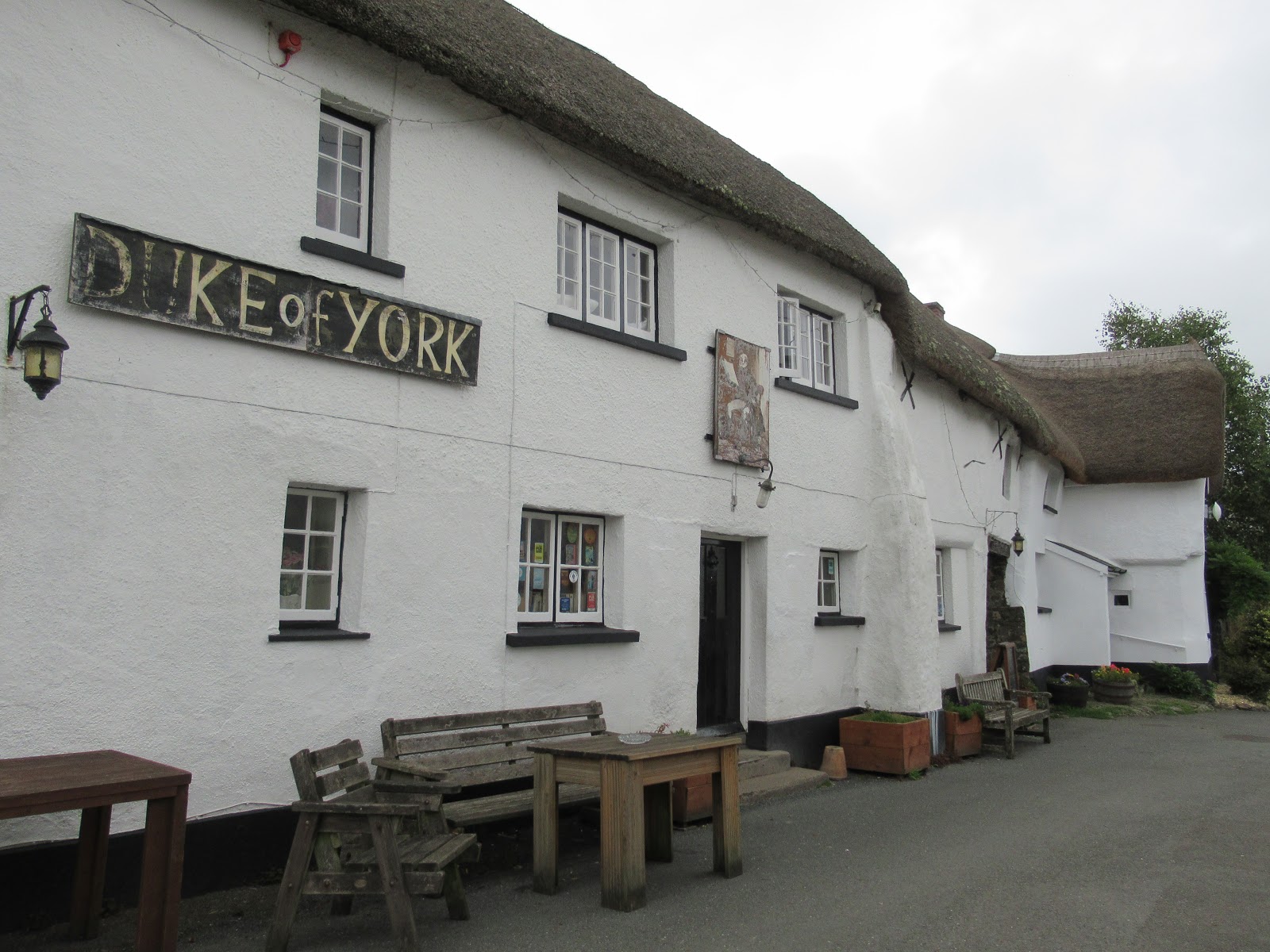
A few more north Devon pics. The pub at Iddlesleigh.
Churchyard pathway.
Exeter, a city about the size of Launceston, has a beautiful cathedral right in the centre.
Intricate stone carving decorates the outside.


A bit of street art to show what might have been inside this building before it became a modern shop.
The village postman at Iddlesleigh.
 Iddlesleigh.

Where will your path take you?


Sunday, August 19, 2018

Seeking sanctuary

Ireland, like Scotland, England and Wales, has so many castles, churches, stone buildings and bridges, in various states of disrepair but many still in use after hundreds of years, that you tend to become rather blaise after awhile. "Oh, another castle? So what?" One thing that does seem to be unique to Ireland are round towers in old monastic sites. This one is called Clonmacnoise. It is strategically located in the middle of the country on the River Shannon which has always been a major north-south transportation route.
 It was established in the 544AD. There are some funny stories about its founder St Ciaran.

There are two round towers still standing here. They were built as a refuge for the monks during numerous attacks. They would climb a ladder to get inside and then pull the ladder up so their attackers could not follow. They were attacked by Vikings but more often by their own country men. So much for the idea of churches being places of sanctuary.

Two of the high crosses have been moved into the climate controlled display buildings to preserve them. They are over 1,000 years old and quite beautiful.
Numerous pieces of stone carvings from the buildings and grave slabs are also inside.


We visited Clonmacnoise on our way north back toward Dublin. We are staying two nights on the banks of the Grand Canal which connects the River Shannon to Dublin in the east. Once used for transporting goods for industry and commerce it is now used by recreational boats. Tomorrow we drove to Dublin, fly to Bristol and drive south for our final week of ancestor hunting in Devon.

Blarney

They said there was a mountain at the top of the valley.
Apparently it is Ireland's tallest - Mt Carrauntoohill, 1010m. The donkeys at the start of the walk were friendly and gave nothing away.
The weather was not so friendly. Not cold but a strong head wind blowing threatening clouds toward us. We kept walking.
And mist and cloud racing...the high-vis orange sheep should have been a warning but we kept on going.
We walked for a couple of hours until we saw two beautiful small lakes surrounded by steep slopes and rocky cliffs, buffeted by the wind throwing rain drops at us. These lakes allegedly, sit at the foot of Carrauntoohill itself. But we could see no sign of a big pointy mountain. We put our rain jackets on and walked back down the valley.
Were we the victims of Irish blarney or a leprechaun's joke? Was there ever really a mountain up in that cloud? Who knows? It was a good walk in the kind of wild, and not over crowded, landscape that I do really enjoy.

Thursday, August 16, 2018

Mist, forts, rain, rugged coast and Star Wars

So, we decided to go for a drive one showery day. 251km later and an average of 1 photo for every 2 kms - here are just a few photos from the varied and at times dramatic drive marketed as The Ring of Kerry.

Not a fairy tale castle but an old army barracks.
A ring fort from around 900AD, built by farmers to protect their homes inside. There are at least 6 of these still in existence. The houses inside would once have had wood and turf roofs.
Rocky coastlines all around. The rock in the foreground has the oldest in the world in-situ (dinosaur) tetrapod footprints on it according the sign - 345 million years old.
See the triangle shaped islands in the distance?
These are the Skellig Islands where monks once lived in stone beehive shaped huts. You may have seen them in the recent Stats Wars movie, some scenes of which were filmed there.
Portmagee. The Irish like to paint their houses in bright colours
More dramatic coastal views.

Sneem - another brighlty coloured village.
After Sneem the road returned us to Killarney via the mountains.


Ladies View. So called because in Victorian times the ladies would come up here in their horse and carts for a picnic looking back toward Killarney and the very pretty view of the lakes.


This friendly wild local was taking grass from people's hands at the lookout. 
The narrowest part of the road.
Looking back into the late afternoon sun.

We ended our 12 hour day with a delicious pizza in Killarney, the first evening meal we have eaten out for a few months. We are usually in our pjs eating at our current 'home' by this time of the evening.